
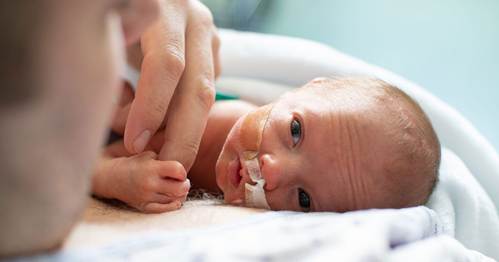
Supporting Your Baby’s Feeding Journey
What we do know is that eating doesn’t just happen. In the womb, the fetus is continually smelling, tasting, sucking, and swallowing the amniotic fluid. By the time he is full term he is an experienced and coordinated eater.
When premature infants are born these enjoyable oral experiences stop and due to their immaturity, they will be tube fed. However, the premature brain will continue to develop and make connections to both positive and negative oral experiences.
The Milk Drop Method was created to provide consistent positive enjoyable oral experiences to help the infant wire the association of hunger to the pleasure of eating and the satisfaction of feeling full.
Every little drop— every little moment—makes a big difference
How We Support Your Baby
Familiar Comfort – Your parents will wear two scent hearts, bringing them back to place near your face. Their scent is soothing and reassuring.
Positioning for Success – After care, we’ll gently place you on your side or in skin-to-skin contact with your parents, keeping your hands near your face so you can self-soothe by sucking on your fingers.
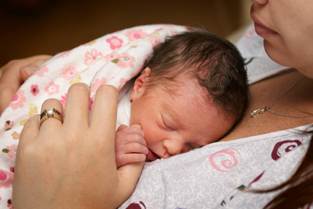
The Power of Skin-to-Skin Contact
Testimonials
Dad of 24 weeker-now 35 weeks
Mother of 25 weeker now 32 weeks
Mother of 27 week twins – home at 37 weeks
Articles & Citations
Bingham, Peter M. “Deprivation and Dysphagia in Premature Infants.” Journal of Child Neurology, vol. 24, no. 6, 1 June 2009, pp. 743-749, https://doi.org/10.1177/0883073808329530.
Pickler, R. H., McGrath, J. M., Reyna, B. A., McCain, N., Lewis, M., Cone, S., Wetzel, P., Best, A. (2010). A model of neurodevelopmental risk and protection for preterm infants. The Journal of perinatal & neonatal nursing, 24(4), 356– 365.doi:10.1097/JPN.0b013e3181fb1e7
Shubert, T. R., et al. “Effects of Pacifier and Taste on Swallowing, Esophageal Motility, Transit, and Respiratory Rhythm in Human Neonates.” Neurogastroenterology & Motility, vol. 28, no. 4, 4 Jan. 2016, pp. 532–542, https://doi.org/10.1111/nmo.12748.
O’Rourke, B., Fuller, K., Parker, L., Moore, T. (2022). Provision of positive oral experiences for premature infants by offering milk drops: A clinical practice change initiative. Journal of Neonatal Nursing. 10.1016/j.jnn.2022.11.014.
Séassau, Alexia, et al. “Neonatal Care Unit Interventions on Preterm Development.” Children (Basel), vol. 10, no. 6, 2 June 2023, pp. 999 999, https://doi.org/10.3390/children10060999.
Selman, R., &; Aleksandra Popkowska. (2024). Optimizing Neonatal Prefeeding Habilitation: A Holistic Approach Integrating Neonatal Learning Behaviors, Motor Development, and Evidence-Based Interventions. Neonatal Network the Journal of Neonatal Nursing, 43(4), 199–211. https://doi.org/10.1891/nn-2024-0004